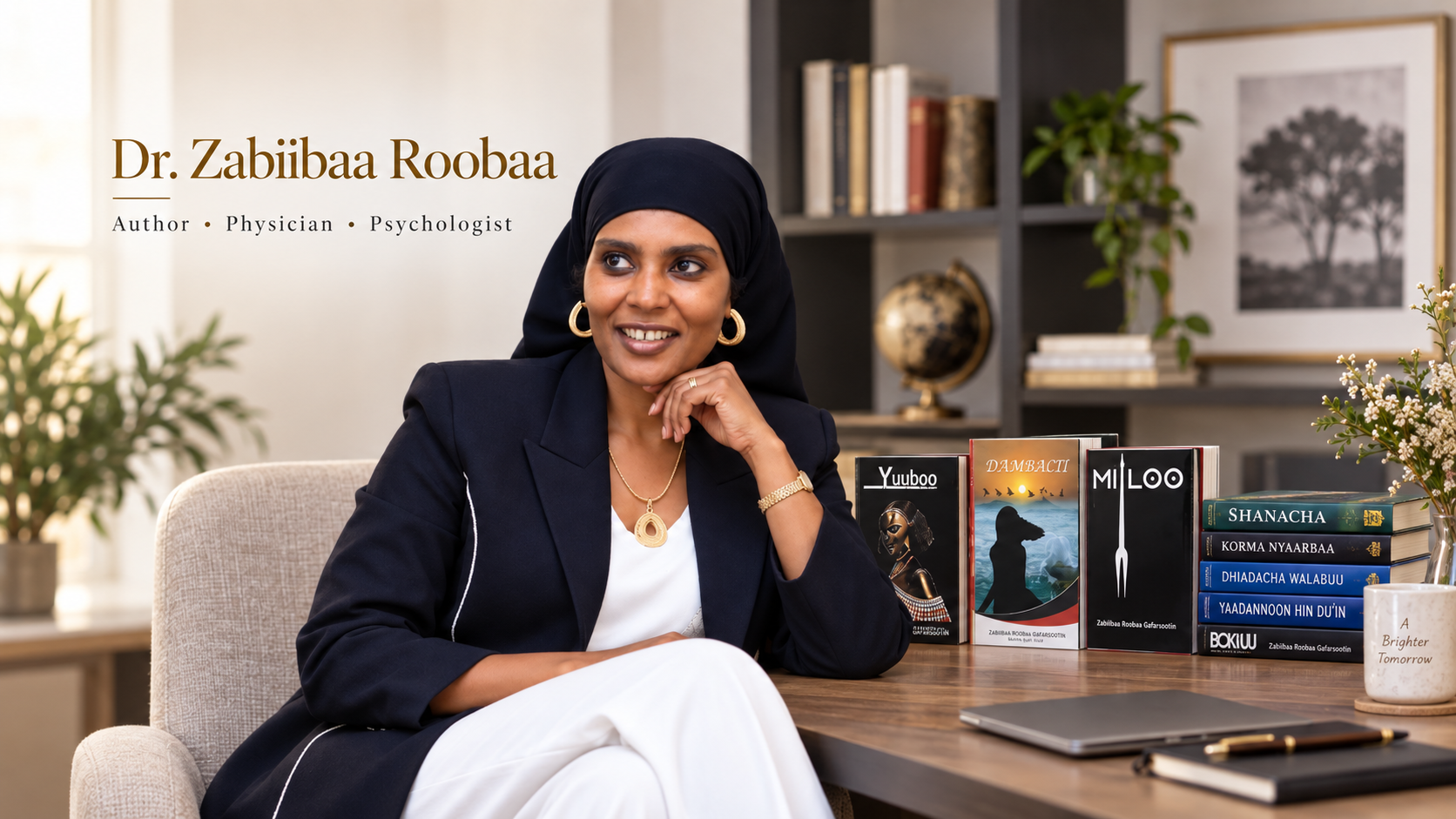
Dr. Zabiibaa Roobaa
Medicine
Cardiovascular Medicine
Psychology
Afaan Oromo Literature
Writing & Editing
Community Service
Dr. Zabiibaa Roobaa Gafarsoo was born in Dodola, West Arsi Zone of Oromia, Ethiopia. Her early life established two foundations that continued throughout her career: a strong commitment to education and a deep relationship with Afaan Oromo, history and storytelling.
Her father was a teacher with extensive knowledge of history. Family reading, historical discussion and storytelling became part of the environment in which she grew up and later influenced her development as a writer.
Her life later expanded across Ethiopia, Australia and the United States. Medicine, psychology, literature and community service developed along that international journey while Afaan Oromo and her connection with Oromia remained central to her intellectual and creative life.
Profile at a Glance
| Profile | Details |
|---|---|
| Full name | Dr. Zabiibaa Roobaa Gafarsoo |
| Birthplace | Dodola, West Arsi Zone, Oromia, Ethiopia |
| Professional fields | Medicine and psychology |
| Advanced medical direction | Cardiovascular-focused medical study and professional development |
| Early technical education | Information Technology diploma in Shashamane |
| Literary record | Ten published books and more than ten edited works |
| International journey | Ethiopia → Australia → United States |
| Community initiative | Hospital and university project in Dodola on a 5.8-hectare site |
Contents
2. Education Across Continents
3. Medicine & Cardiovascular Study
7. Editing & Literary Contribution
Dr. Zabiibaa was born in Dodola, West Arsi Zone, Oromia. Education, history and Afaan Oromo became important parts of the environment in which she grew up.
Her father was a teacher and an important source of historical knowledge. Reading, discussion and family storytelling helped strengthen her interest in both history and writing.
She began writing while still in Grade 6. That early practice later developed into a sustained literary discipline that continued alongside her education and professional life.
The connection between family knowledge, Oromo history and language remained visible in her later books, particularly her historical works.
Dr. Zabiibaa completed her education through Grade 10 in Ethiopia and then studied Information Technology in Shashamane, where she earned a diploma.
She later moved to Australia and completed Grades 11 and 12 there. After completing secondary education, she entered Deakin University and continued her higher education.
After completing a major stage of her education in Australia, she moved to California in the United States, where San Diego became the next center of her academic and professional life.
Information Technology diploma
Grades 11–12 and higher education
University education
Professional work and continued study
Medicine became one of the central professional pillars of Dr. Zabiibaa’s life. She studied Medicine and continued professional work and advanced medical education in the United States.
Her advanced direction has focused on cardiovascular medicine, the field concerned with diseases of the heart and circulatory system.
In San Diego, medical work, continuing study and professional development have remained interconnected parts of her career.
Dr. Zabiibaa also studied Psychology and has worked in the field. Psychological counseling has formed part of her professional activity in San Diego.
Psychology adds an important dimension to health by examining emotion, thought, behavior, relationships, stress and adaptation.
Medicine and psychology remain distinct disciplines, but together they broaden the understanding of physical and psychological wellbeing.
Writing became part of Dr. Zabiibaa’s life long before the publication of her first book. She began writing while still a school student and continued developing the habit through reading, historical learning and observation of social life.
Her father’s historical knowledge became particularly important to her development. Family discussion strengthened both her interest in history and her ability to write in Afaan Oromo.
Her fictional writing also draws heavily on society, relationships, personal experience and events observed within the community.
Alongside books, she has also worked with poetry and songs, extending her creative activity into other forms of Oromo artistic expression.
Between 2019 and 2023, Dr. Zabiibaa published ten books spanning fiction, history, love stories, cultural memory and health-centered narrative.
The image frame automatically adapts to the 3D book mockups. Images remain fully visible without stretching or cropping, while titles and descriptions stay in a separate white section below the image.
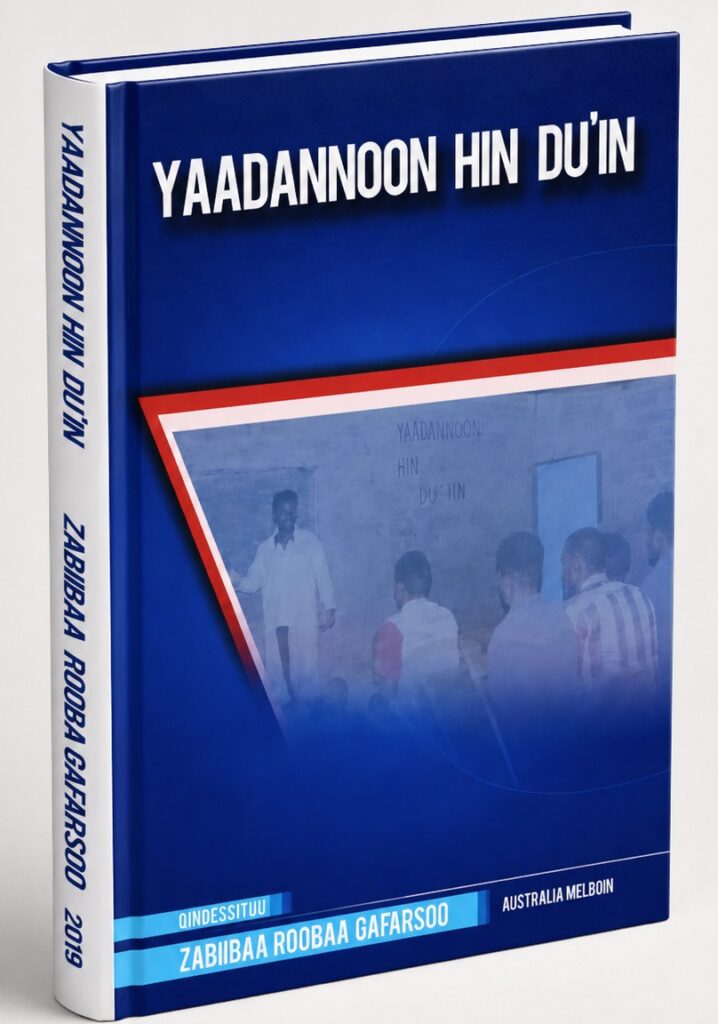
Yaadannoon Hin Du’iin
A long-form fictional work published in 2019 and one of the first two books in her published catalogue.
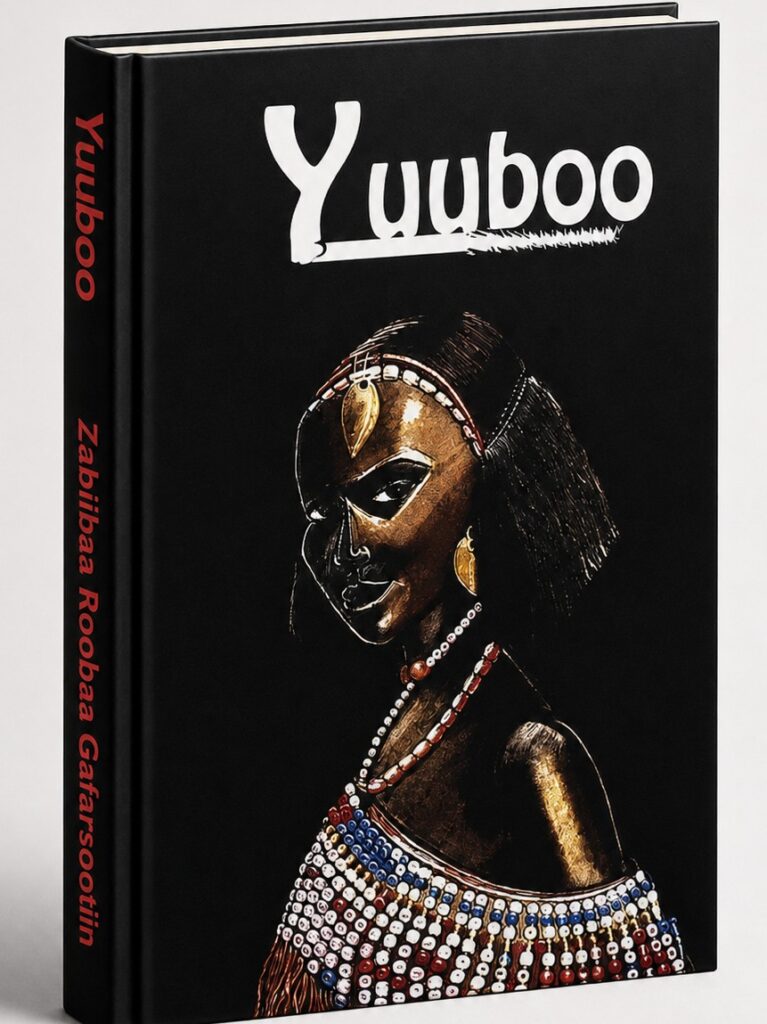
Yuuboo
A short fictional work based on a love story and published in 2019.
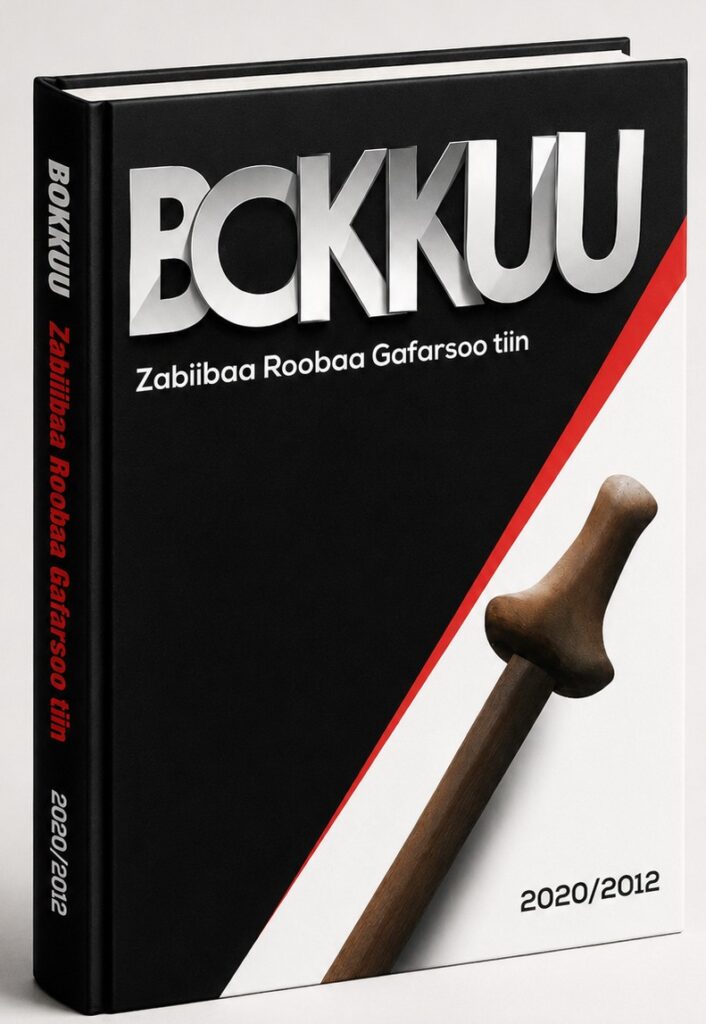
Bokkuu
A historical work published in 2020 and part of her continuing engagement with Oromo history and cultural memory.
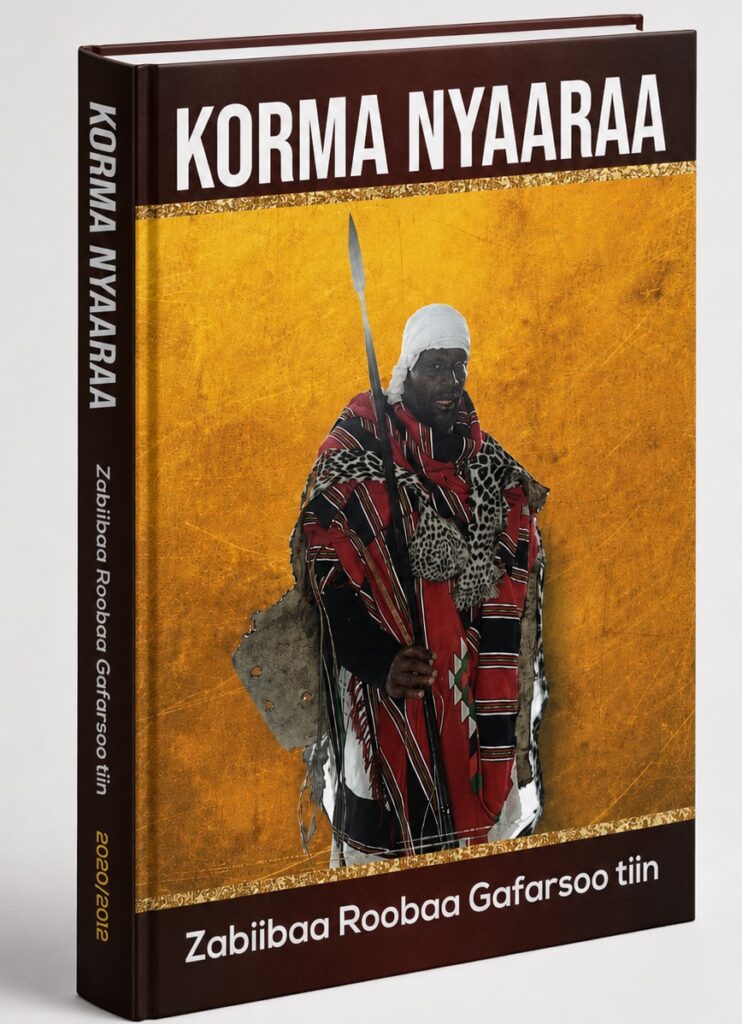
Korma Nyaaraa
A long-form fictional work published in 2020.
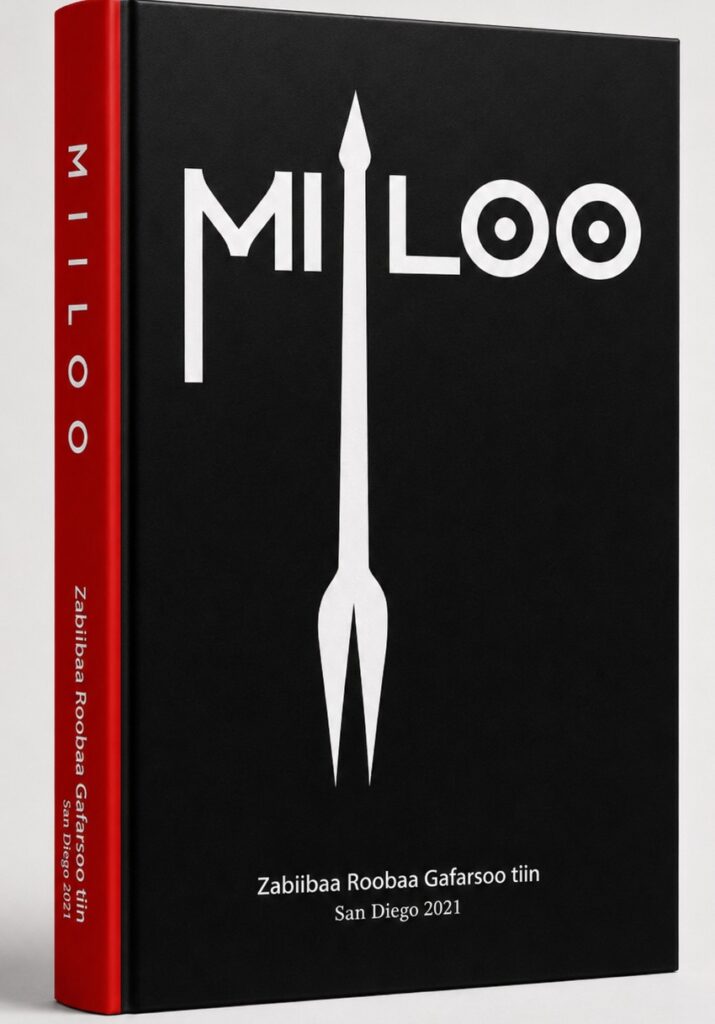
Miiloo
A historical work published in 2021. Dr. Zabiibaa wrote the book with the contribution of her father.
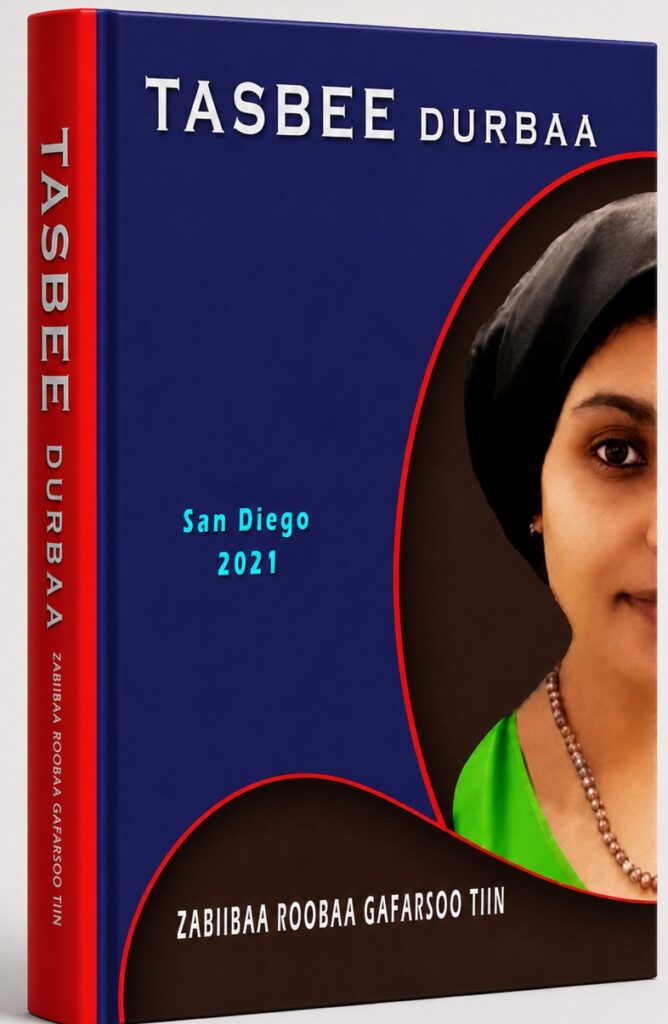
Tasbee Durbaa
A long-form fictional work published in 2021.
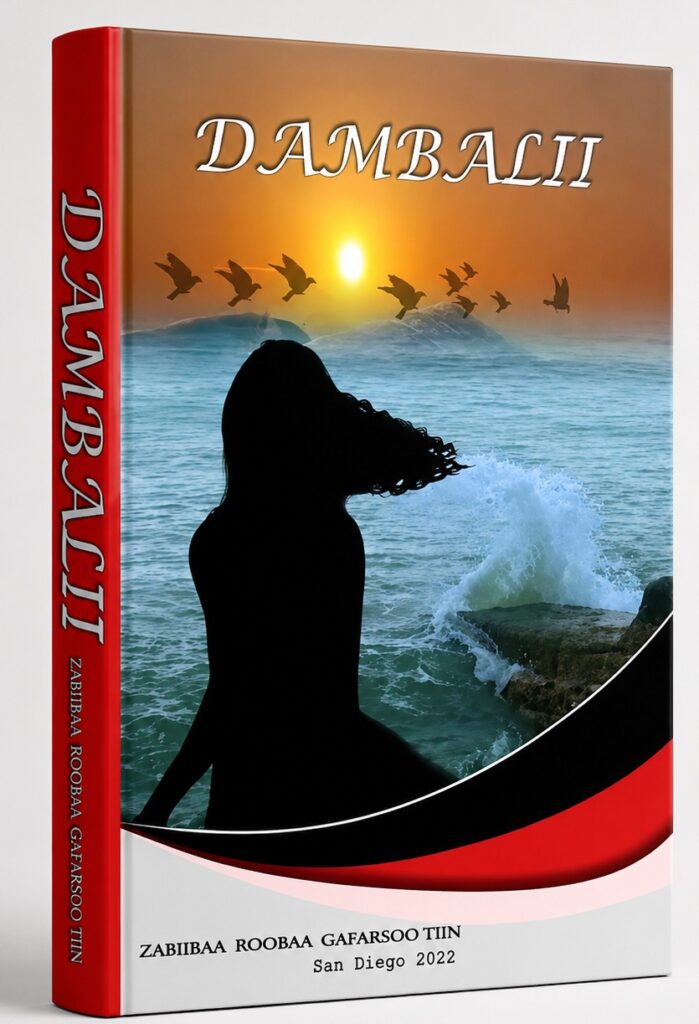
Dambalii
A fictional work published in 2022 that carries themes connected with cardiovascular health through literary narrative.
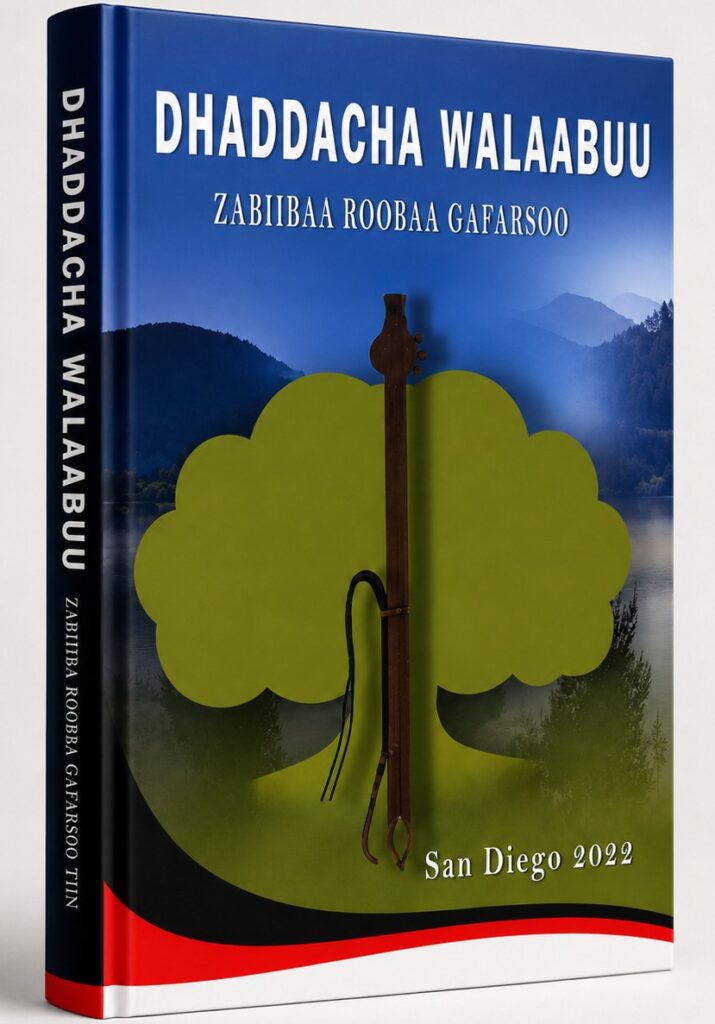
Dhaddacha Walaabuu
A historical work published in 2022 and part of her continuing writing on Oromo history and cultural memory.
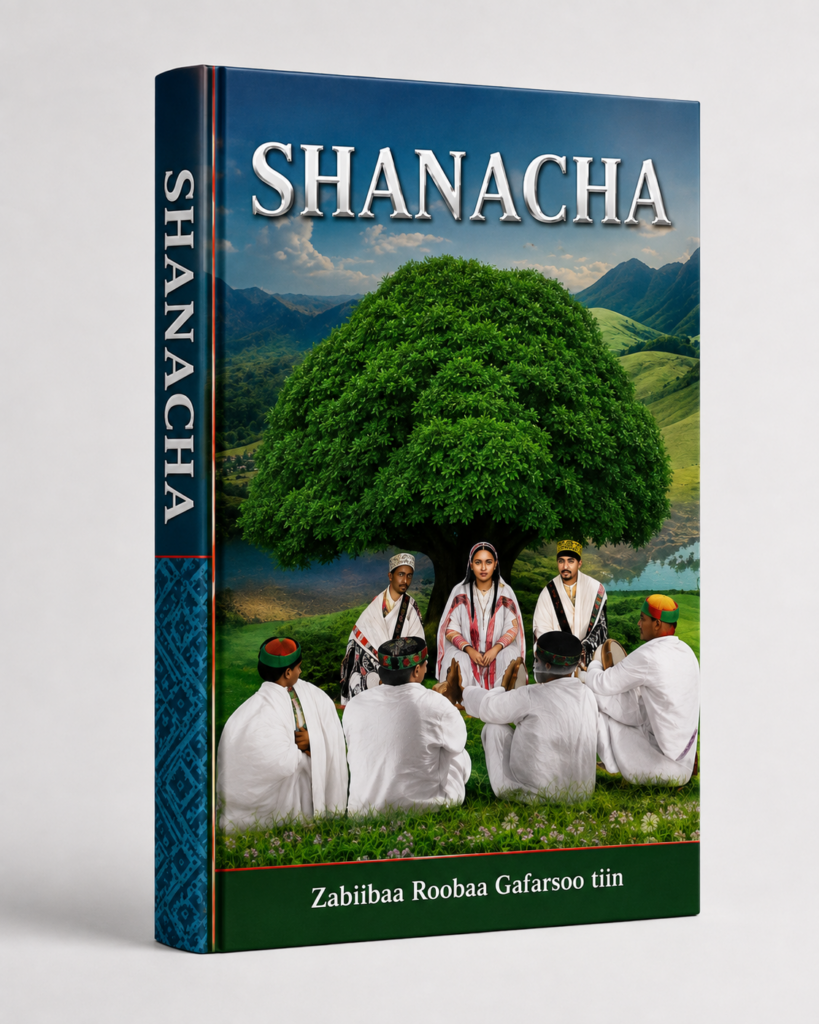
Shanacha
A historical work published in 2023.
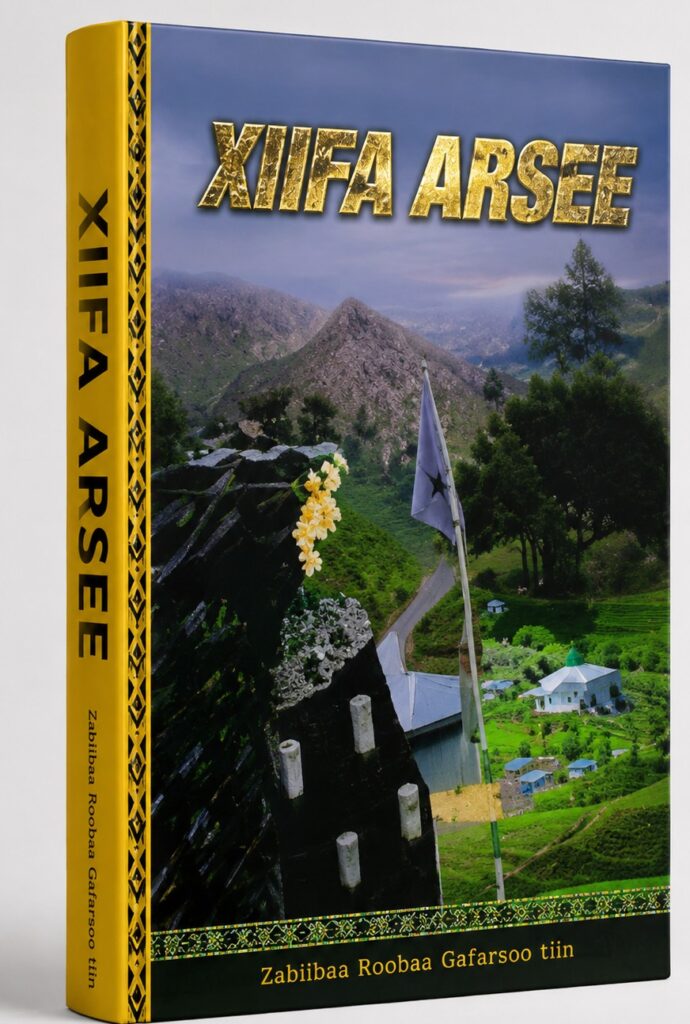
Xiifa Arsee
A fictional work published in 2023, completing the ten-book sequence published between 2019 and 2023.
Dr. Zabiibaa’s literary contribution extends beyond books published under her own name. She has also edited more than ten books written by other authors.
Editing requires a different discipline from authorship. It involves strengthening language, organization, clarity and consistency while preserving the original writer’s voice.
Through this work, her contribution reaches beyond personal publication into the development of other Afaan Oromo manuscripts and writers.
Medicine and literature use different methods, yet both are concerned with human life.
Medicine examines physical health, disease, prevention, diagnosis and treatment. Psychology examines thought, emotion and behavior. Literature gives language to history, relationships, identity, memory and lived experience.
Dr. Zabiibaa’s work brings these fields together most clearly in Dambalii, where cardiovascular-health themes are carried through literary narrative.
Dr. Zabiibaa’s work in literature, health and cultural activity has received recognition in Oromia.
Her recognitions include the third Gaaddisaa Award as well as recognition connected with Oro Book and other literary and professional activities.
One of the strongest connections between Dr. Zabiibaa’s international professional journey and her birthplace is the health-and-education project developed for Dodola.
The idea of establishing a hospital began during her student years. In 2023, land was secured in Dodola and the project moved toward implementation with the participation of her family.
The vision extends beyond a hospital alone and includes a combined hospital and university project on a 5.8-hectare site.
The project has involved cooperation with institutions in Oromia and represents a direct effort to convert education and professional experience into long-term community service.
Dr. Zabiibaa’s international educational journey did not separate her from Afaan Oromo. The language remained one of the strongest continuities across the different stages of her life.
Through historical writing, fiction and editing, she has used Afaan Oromo to record experiences, stories and ideas connected with Oromo society.
Language carries memory, history, cultural concepts, social experience and ways of interpreting the world. Writing in Afaan Oromo therefore becomes both literary work and participation in the continuing intellectual life of the language.
The combination of medical education, psychology, professional work, writing and community projects requires disciplined management of time.
Dr. Zabiibaa developed writing as a scheduled practice and has described a personal target of writing five pages a day.
That approach illustrates how a large manuscript becomes manageable when creative work is divided into steady daily progress.
Dr. Zabiibaa’s message to Oromo girls and young women centers on confidence, education and a strong sense of self.
Her public message emphasizes that being a woman does not prevent a person from pursuing ambitious educational, professional or creative goals.
Her own journey combines medicine, psychology, writing, editing and community development while maintaining a strong connection with language and cultural identity.
Dr. Zabiibaa’s biography extends beyond a list of academic and professional achievements.
Her education carried her from Ethiopia to Australia and the United States. Her literary work kept Afaan Oromo, history and community experience at the center of her intellectual life. Her editorial work strengthened the work of other writers, while medicine and psychology shaped her professional path.
The Dodola hospital-and-university project directs those years of education and professional development back toward the community where her journey began.
Together, these elements form a larger pattern: knowledge is acquired, developed, expressed and finally directed toward service.
Conclusion
Dr. Zabiibaa Roobaa’s biography is a story of movement without disconnection.
It begins in Dodola, continues through education in Ethiopia and Australia, expands through professional life in the United States, and repeatedly returns to Afaan Oromo, literature, history and community service.
Medicine gave her a scientific and clinical direction. Psychology added another dimension of human wellbeing. Literature created a space to record memory and interpret society, while editing extended her contribution to the work of other writers.
The hospital-and-university initiative in Dodola gives those years of education and professional development a direct community dimension.
Her journey demonstrates that science and literature can exist within the same life, that international education does not require cultural disconnection, and that professional achievement can develop alongside responsibility to community.
This biography is grounded principally in extended biographical coverage documenting Dr. Zabiibaa Roobaa’s childhood, education, professional development, books, writing practice, community work and future plans.
Publication Information
| Field | Information |
|---|---|
| Article type | Biographical Feature |
| Subject | Dr. Zabiibaa Roobaa Gafarsoo |
| Primary themes | Medicine, psychology, literature, Afaan Oromo, education, cultural identity and community service |
| Language | English |
| Editorial update | September 2026 |