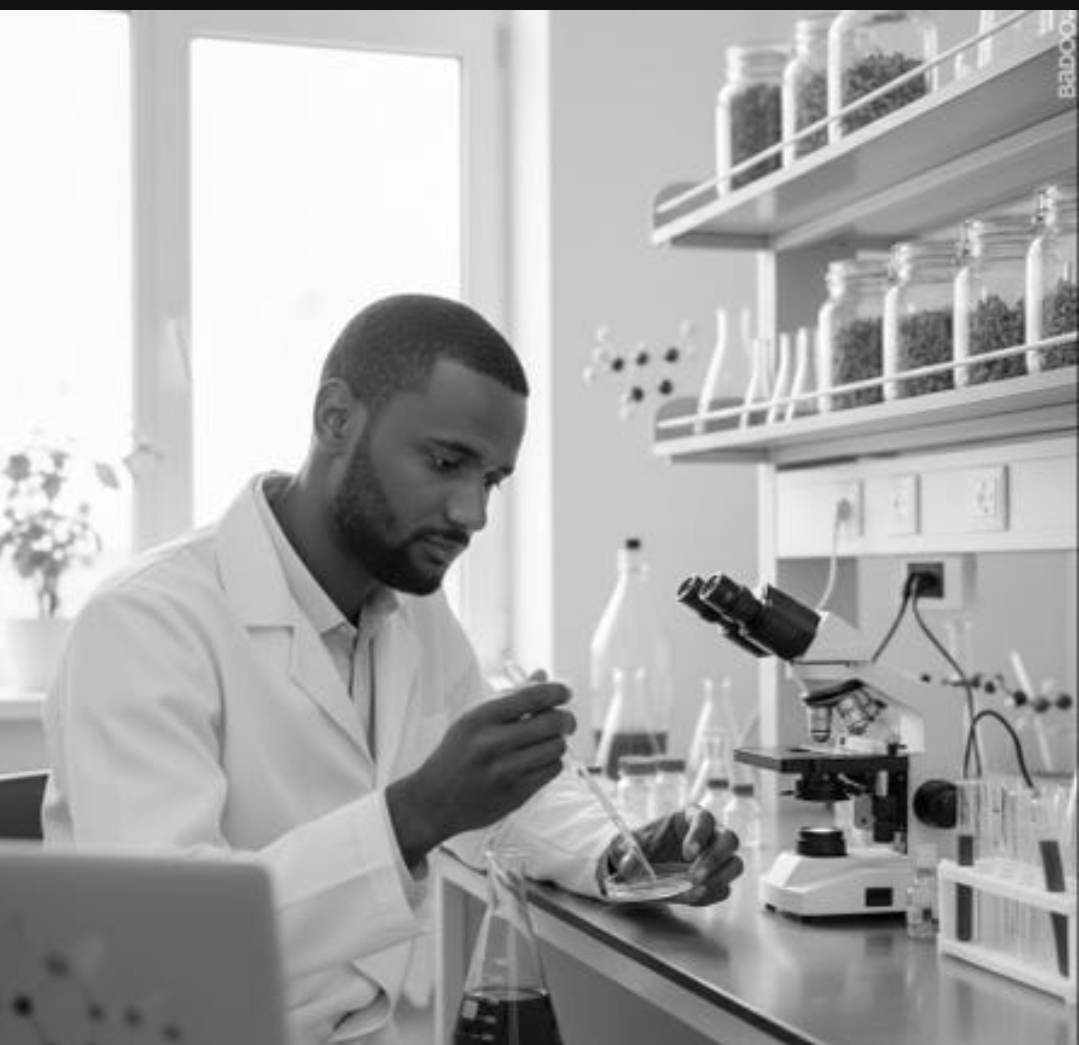
Dr. Huzayifa Muhammad Awol Shifaa
Also Known as Uzefa Mohammedawwol Shifaa
Evidence-Based Natural Medicine Specialist | Independent Biomedical and Health Sciences Researcher in Molecular Virology, Immunology, Cell Biology, Hepatology, Pharmacology, and Pharmacognosy
Dr. Huzayifa Muhammad Awol Shifaa is an Evidence-Based Natural Medicine Specialist, independent biomedical and health sciences researcher, educator, and public health communicator whose professional work focuses on the scientific understanding of diseases, medicinal plants, natural therapeutic compounds, and their interaction with human biological systems.
His principal fields of research and professional interest include Molecular Virology, Immunology, Cell Biology, Hepatology, Pharmacology, Pharmacognosy, Phytochemistry, Natural Product Research, and evidence-based natural medicine.
His work is built on the principle that natural medicine should be studied and practiced through scientific evidence, biological mechanisms, pharmacological analysis, safety assessment, ethical healthcare standards, and careful evaluation of both traditional knowledge and modern biomedical research.
Dr. Huzayifa is committed to building a scientifically responsible connection between medicinal-plant knowledge and modern health sciences. Rather than accepting traditional claims without investigation, he emphasizes the importance of examining medicinal plants according to their active compounds, biological effects, therapeutic potential, toxicity, dosage, interactions, and quality of available scientific evidence.
Founder and Director
Dr. Huzayifa is the Founder and Director of the Oromia Center for Herbal and Traditional Medicine — Giddu Gala Yaala Qoricha Aadaa Oromiyaa.
The institution was established to promote safe, responsible, scientifically informed, and evidence-based natural healthcare. Its work extends beyond the preparation and use of medicinal plants to include health education, scientific research review, disease awareness, prevention, patient consultation, and the responsible evaluation of traditional therapeutic knowledge.
The center seeks to contribute to the development of a more accountable natural healthcare system in which treatments are evaluated according to scientific evidence, biological plausibility, patient safety, ethical standards, and measurable health outcomes.
Institutional Background
The Oromia Center for Herbal and Traditional Medicine is a specialized natural healthcare, research, and public health education institution.
Its major areas of activity include:
- Evidence-based natural and plant-derived therapies
- Scientific evaluation of medicinal plants
- Pharmacological and pharmacognostic research
- Public health education and disease prevention
- Patient-centered natural healthcare consultation
- Review of traditional therapeutic knowledge
- Health-science communication for the general public
- Safety assessment of medicinal plants and natural products
- Promotion of ethical and responsible healthcare practices
- Integration of scientifically supported traditional knowledge with modern biomedical understanding
The center recognizes that traditional medical systems may contain valuable therapeutic knowledge developed through generations of observation and practical experience. However, it also maintains that traditional use alone does not constitute complete scientific proof of safety or clinical effectiveness.
For this reason, medicinal plants and natural formulations should be examined through pharmacology, pharmacognosy, phytochemistry, toxicology, molecular biology, clinical research, and modern diagnostic science.
Locations of the Center
The institution operates through multiple branches to improve accessibility and expand natural healthcare, public education, and regional outreach services.
Main Headquarters
Shashemene City, Oromia Region, Ethiopia
The Shashemene headquarters serves as the central hub for administration, patient consultation, coordination of clinical services, research activities, medicinal-product development, public health education, and digital health communication.
Jimma Branch
Jimma City, Oromia Region, Ethiopia
The Jimma branch focuses on natural healthcare consultation, patient services, community health education, disease awareness, and regional outreach activities.
Dire Dawa Branch
Dire Dawa City, Ethiopia
The Dire Dawa branch provides patient consultation, natural healthcare services, public health education, and outreach programs for communities in eastern Ethiopia and surrounding regions.
The branches work in coordination to promote consistent, responsible, safety-conscious, and scientifically guided natural healthcare services.
Professional and Scientific Areas of Interest
Dr. Huzayifa’s work covers several interconnected areas of biomedical and natural-product science.
Molecular Virology
His research interests in molecular virology include the structure, replication, persistence, pathogenic mechanisms, and immune-evasion strategies of disease-causing viruses.
Particular attention is given to chronic viral infections and the molecular processes that enable viruses to enter host cells, replicate, persist within infected tissues, avoid immune clearance, and contribute to long-term disease progression.
His work examines interactions between viral proteins, host-cell receptors, intracellular signaling pathways, gene transcription, immune regulation, and tissue injury.
Immunology
His immunological interests include innate immunity, adaptive immunity, immune tolerance, chronic inflammation, immune exhaustion, immune regulation, cytokine signaling, antibody responses, T-cell function, natural killer cell activity, and the mechanisms through which chronic infections alter normal immune responses.
He is particularly interested in understanding why the immune system successfully eliminates some infections while allowing other infections to become chronic.
This includes studying how pathogens suppress, redirect, exhaust, or evade immune responses and how natural compounds may influence inflammatory, antiviral, or immunomodulatory pathways.
Cell Biology
His work in cell biology focuses on the relationship between disease-causing agents and essential cellular processes.
These include:
- Cell entry and receptor-mediated attachment
- Intracellular transport
- Gene expression and transcription
- Protein synthesis
- Autophagy
- Apoptosis
- Oxidative stress
- Cellular signaling
- DNA repair
- Mitochondrial function
- Cell-cycle regulation
- Inflammation
- Tissue regeneration
- Malignant cellular transformation
Understanding these processes is essential for explaining how chronic infections, toxic compounds, metabolic disorders, and prolonged inflammation may damage organs and contribute to fibrosis, cellular dysfunction, or cancer development.
Hepatology
Hepatology is one of Dr. Huzayifa’s principal areas of professional and scientific focus.
His work addresses the biology, prevention, progression, diagnostic evaluation, and therapeutic challenges of liver diseases, including:
- Hepatitis B virus infection
- Hepatitis C virus infection
- Chronic viral hepatitis
- Metabolic dysfunction-associated steatotic liver disease
- Fatty liver disease
- Liver inflammation
- Hepatic fibrosis
- Cirrhosis
- Drug-induced liver injury
- Toxic liver injury
- Immune-mediated liver disease
- Hepatocellular carcinoma
- Liver complications associated with chronic infections and metabolic disorders
A major area of his research interest is the molecular biology of hepatitis B virus.
This includes:
- HBV attachment and entry into hepatocytes
- Intracellular viral replication
- Conversion of relaxed circular DNA into covalently closed circular DNA
- Persistence of HBV cccDNA inside infected liver cells
- Production of viral proteins and subviral particles
- Viral transcription and replication mechanisms
- Functions of the HBx protein
- Immune tolerance during chronic infection
- T-cell exhaustion
- Viral immune evasion
- Liver inflammation and fibrosis
- Progression from chronic hepatitis to cirrhosis and liver cancer
- Biological barriers to achieving complete viral eradication
- Potential antiviral and hepatoprotective activities of natural compounds
His hepatology-related work also emphasizes that liver-disease management should be guided by accurate diagnosis, laboratory evaluation, disease stage, viral activity, liver function, fibrosis assessment, treatment history, and individual patient risk.
Pharmacology
Dr. Huzayifa’s pharmacological interests include the mechanisms through which medicines and natural bioactive compounds interact with cells, receptors, enzymes, organs, and disease pathways.
His work considers:
- Mechanisms of drug action
- Absorption and distribution
- Metabolism and elimination
- Dose–response relationships
- Therapeutic effects
- Adverse effects
- Drug toxicity
- Herb–drug interactions
- Drug–drug interactions
- Individual variability in treatment response
- Effects of medicines on liver and kidney function
- Pharmacological activities of medicinal-plant compounds
- Safety and therapeutic limitations of natural products
He advocates against the assumption that every natural substance is automatically safe. Natural compounds may produce beneficial effects, but they may also cause toxicity, interfere with prescribed medicines, worsen underlying diseases, or become harmful when used in excessive or poorly standardized doses.
Pharmacognosy
Pharmacognosy is another major component of his work.
His pharmacognostic research focuses on medicinal substances obtained from plants and other natural sources, including their identity, composition, preparation, quality, biological activity, safety, and potential therapeutic applications.
Medicinal plants are evaluated according to:
- Scientific and botanical classification
- Plant family
- Geographical distribution
- Traditionally used plant parts
- Harvesting and preparation methods
- Active phytochemical compounds
- Pharmacological activities
- Potential therapeutic effects
- Toxicological properties
- Safe-use considerations
- Contraindications
- Herb–drug interactions
- Quality-control requirements
- Standardization
- Available preclinical and clinical evidence
This approach helps distinguish traditional claims, laboratory findings, animal-study results, observational evidence, and clinically demonstrated therapeutic effects.
Clinical and Research Focus
Dr. Huzayifa’s clinical, educational, and research interests include a wide range of chronic and complex health conditions.
His principal area of focus is liver disease, particularly chronic viral hepatitis and the biological interaction between viruses, liver cells, and the immune system.
His broader areas of interest include:
- Chronic metabolic disorders
- Digestive-system diseases
- Kidney and urinary tract disorders
- Immune-system dysfunction
- Chronic inflammatory conditions
- Respiratory conditions
- Reproductive health concerns
- Gastrointestinal disorders
- Selected infectious diseases
- Natural-product pharmacology
- Medicinal-plant safety
- Disease prevention
- Lifestyle-related health risks
- Public health communication
His approach combines modern disease understanding with the responsible scientific evaluation of natural therapeutic options.
Therapeutic Approach
Dr. Huzayifa promotes an individualized and evidence-informed approach to natural healthcare.
His therapeutic framework may take into account:
- Patient history
- Signs and symptoms
- Laboratory findings
- Diagnostic information
- Disease mechanism
- Disease stage and severity
- Existing medical conditions
- Current medicines
- Liver and kidney function
- Possible treatment interactions
- Dietary and lifestyle factors
- Safety considerations
- Available scientific evidence
- Traditional therapeutic knowledge
- Individual treatment response
He does not support the assumption that one natural formulation is suitable for every person with the same diagnosis.
Patients with similar symptoms may have different underlying diseases, disease stages, risk factors, organ-function status, treatment histories, and biological responses. Responsible treatment therefore requires individualized assessment and regular monitoring.
Natural healthcare should not be used as a replacement for emergency treatment, essential diagnostic testing, vaccination, surgery, or medically necessary conventional care.
When a patient requires specialized medical evaluation, advanced diagnostic procedures, emergency intervention, or hospital-based treatment, referral to an appropriate licensed medical facility is essential.
Scientific Philosophy
Dr. Huzayifa’s scientific philosophy is based on balanced evaluation, intellectual independence, ethical responsibility, and respect for evidence.
His guiding principle is:
Traditional medicine should not be practiced blindly, and modern medicine should not reject traditional knowledge without fair scientific evaluation.
He believes that valuable medicinal knowledge may originate from traditional practice, community experience, natural-product observation, or modern laboratory research.
However, every therapeutic claim must be evaluated according to the quality of supporting evidence.
A medicinal plant showing biological activity in a laboratory does not automatically prove that it can safely and effectively treat disease in humans.
Similarly, successful traditional use in some individuals does not automatically establish the correct dosage, long-term safety, effectiveness for all patients, or protection from adverse effects.
For this reason, scientific conclusions should distinguish among:
- Traditional evidence
- Laboratory research
- In-vitro studies
- Animal studies
- Observational human studies
- Case reports
- Controlled clinical trials
- Systematic reviews
- Meta-analyses
- Established clinical evidence
This distinction is essential for preventing exaggerated claims and protecting patients from misinformation or unsafe treatment practices.
Scientific Research and Evidence Evaluation
Dr. Huzayifa’s research and educational work draws on multiple sources of biomedical evidence.
These include:
- Peer-reviewed scientific publications
- Molecular and cellular research
- Virology and immunology studies
- Pharmacological literature
- Pharmacognosy research
- Phytochemical analysis
- Toxicological studies
- In-vitro experiments
- Animal studies
- Human observational research
- Clinical trials
- Systematic reviews
- Meta-analyses
- Clinical guidelines
- Traditional medical knowledge
- Documented practical experience
- Patient-safety principles
- Ethical healthcare standards
He emphasizes critical appraisal rather than simply collecting scientific terminology or research conclusions.
Important questions include:
- What type of study was conducted?
- Was the research performed in cells, animals, or humans?
- How many participants were included?
- Was there an appropriate control group?
- Was the treatment standardized?
- Was the dosage clearly defined?
- Were adverse effects monitored?
- Were the results independently reproduced?
- Were the findings clinically meaningful?
- What were the study’s limitations?
- Can the findings be applied safely to the wider population?
This method helps prevent weak, preliminary, or misleading evidence from being presented as established medical fact.
Public Health Education and Digital Outreach
Public health education is a central component of Dr. Huzayifa’s professional mission.
Through the official website QorichaOromiyaa.com and the social media platform Mana Qoricha Aadaa Oromiyaa, he provides research-informed health education designed to make complex biomedical information understandable to the wider community.
The educational content addresses topics such as:
- Causes and mechanisms of diseases
- Signs and symptoms
- Disease progression
- Risk factors
- Complications
- Prevention strategies
- Early diagnosis
- Laboratory investigations
- Lifestyle and nutritional factors
- Safe use of medicinal plants
- Limitations of natural therapies
- Possible treatment interactions
- Chronic-disease management
- Liver-disease awareness
- Viral-hepatitis education
- Interpretation of medical research
- Public-health misinformation
- Ethical healthcare practices
- Patient safety
The purpose of this educational work is to enable individuals to better understand their health, recognize warning signs, seek appropriate medical evaluation, and make informed healthcare decisions.
Medicinal-Plant Research and Education
The center places strong emphasis on the scientific study of medicinal plants and naturally derived therapeutic compounds.
Before a plant is discussed or considered for therapeutic use, available information may be reviewed according to:
- Botanical identity
- Scientific classification
- Plant part used
- Traditional indications
- Method of preparation
- Major phytochemical compounds
- Proposed biological mechanisms
- Pharmacological effects
- Antiviral activity
- Antibacterial activity
- Antifungal activity
- Anti-inflammatory activity
- Antioxidant activity
- Immunomodulatory activity
- Hepatoprotective activity
- Toxicological effects
- Contraindications
- Pregnancy and breastfeeding risks
- Liver and kidney safety
- Herb–drug interactions
- Appropriate dosage considerations
- Standardization
- Quality control
- Available human clinical evidence
This process is designed to reduce preventable harm, promote scientific accountability, and distinguish promising research from clinically proven treatment.
Ethical Healthcare Principles
Dr. Huzayifa’s work is guided by patient dignity, confidentiality, scientific honesty, informed decision-making, and the fundamental healthcare principle of avoiding harm.
The center does not support:
- Claiming that every natural medicine is harmless
- Describing preliminary laboratory findings as confirmed cures
- Concealing possible adverse effects
- Ignoring treatment limitations
- Recommending one treatment for every patient without assessment
- Advising patients to stop essential medicines without appropriate supervision
- Using fear or misleading promises to attract patients
- Presenting unsupported medical claims as established scientific facts
- Rejecting modern diagnostic methods
- Exploiting patients who are living with chronic or serious diseases
Responsible healthcare requires openly explaining what is scientifically established, what remains uncertain, what evidence is still preliminary, and where further research is necessary.
Vision
To become a trusted scientific, educational, and natural-healthcare reference institution in Ethiopia and across Africa.
The center’s long-term vision is to contribute to a healthcare environment in which valuable traditional medicinal knowledge is preserved, scientifically investigated, ethically practiced, properly standardized, and responsibly connected with modern biomedical science.
Mission
The mission of the Oromia Center for Herbal and Traditional Medicine is to:
- Promote safe and evidence-based natural medicine
- Encourage scientific research on medicinal plants
- Improve the quality and accountability of natural healthcare
- Integrate scientifically supported traditional knowledge with modern health sciences
- Provide individualized and patient-centered natural healthcare services
- Expand public understanding of chronic and preventable diseases
- Promote accurate health education
- Challenge medical misinformation
- Encourage responsible use of medicinal plants
- Improve safety, dosage control, and treatment monitoring
- Promote ethical healthcare principles
- Support communities in making informed health decisions
- Contribute to the scientific development of natural medicine in Ethiopia and Africa
Founder’s Background
Dr. Huzayifa Muhammad Awol Shifaa was born in the Ilu Abba Bora Zone of Western Oromia, Ethiopia, and currently lives and practices in Shashemene City.
His professional journey is defined by a sustained commitment to biomedical learning, independent scientific investigation, natural-product research, public health education, patient safety, and the development of evidence-based natural healthcare.
His work reflects an interdisciplinary approach that connects Molecular Virology, Immunology, Cell Biology, Hepatology, Pharmacology, Pharmacognosy, Phytochemistry, and traditional medicinal knowledge.
Through independent research, health education, medicinal-plant evaluation, and natural healthcare practice, he continues to work toward making natural medicine more scientific, transparent, safe, ethically responsible, and accountable to the communities it serves.