**Chronic Hepatitis B (HBV) and Liver Diseases:
Scientific Reality, Clinical Outcomes, and the Possibility of Sustained Functional Cure**
Abstract
Hepatitis B virus (HBV) infection remains one of the most significant global public health challenges, affecting hundreds of millions of individuals worldwide. Despite widespread misconceptions, a diagnosis of HBV infection—whether acute or chronic—does not constitute a “death sentence.” Advances in virology, hepatology, immunology, and clinical medicine have demonstrated that while a complete sterilizing cure (eradication of all viral genetic material including cccDNA) remains scientifically challenging, a sustained functional cure is achievable and clinically meaningful. This article provides a comprehensive, evidence-based discussion of HBV pathophysiology, viral persistence mechanisms, limitations of current antiviral therapies, and scientifically documented clinical outcomes demonstrating durable viral suppression, immune recovery, normalization of liver function, and dramatic reduction of long-term complications. The article further addresses ethical responsibilities in patient counseling and highlights real-world laboratory-confirmed outcomes consistent with sustained functional cure.
1. Introduction: HBV Is Not a Death Sentence
Being diagnosed with Hepatitis B virus (HBV) infection or chronic liver disease is not equivalent to receiving a terminal diagnosis. HBV is a treatable, manageable, and controllable disease, and under appropriate therapeutic strategies, many patients can achieve long-term viral suppression, immune protection, and full clinical recovery.
The most critical factors determining outcomes are:
Early diagnosis
Timely initiation of appropriate therapy
Avoidance of unnecessary delay
Accurate scientific understanding by healthcare providers
Unfortunately, many patients experience profound psychological distress following diagnosis due to widespread misinformation suggesting that HBV is incurable or inevitably fatal. This misconception is scientifically incorrect and ethically harmful.
2. Hepatitis B as a “Silent Infection”
Hepatitis B is a blood-borne viral infection that primarily targets hepatocytes (liver cells). One of its most dangerous characteristics is its asymptomatic progression.
Many patients remain symptom-free for years or decades.
Liver damage may progress silently until advanced stages such as cirrhosis or hepatocellular carcinoma (HCC).
For this reason, HBV is often referred to as a “silent infection.”
A large proportion of individuals only discover their infection during routine laboratory testing or when complications have already developed.
3. Virology and Molecular Biology of HBV
HBV is a partially double-stranded DNA virus belonging to the Hepadnaviridae family. Its persistence is biologically complex and scientifically well characterized.
3.1 cccDNA: The Core of Viral Persistence
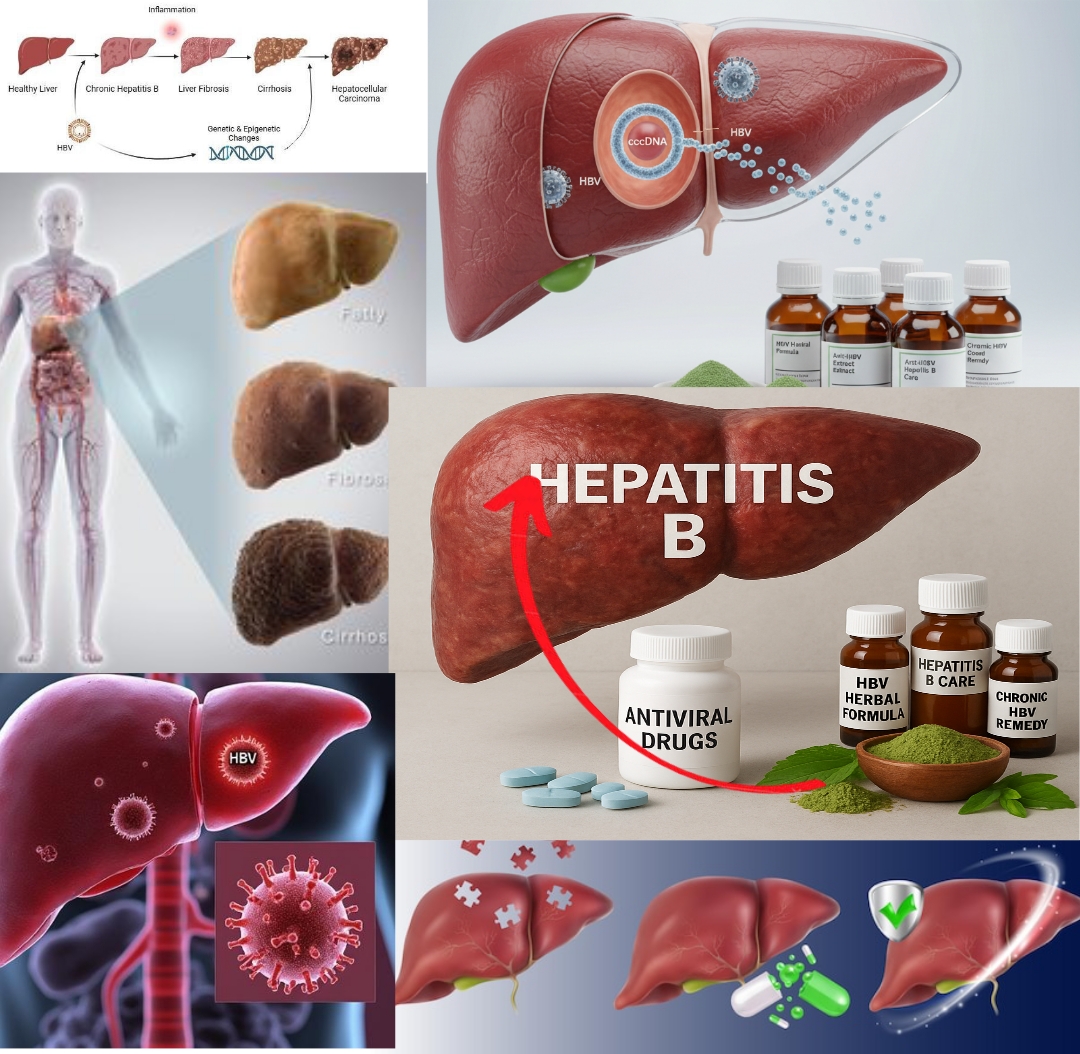
In chronic HBV infection, viral DNA forms a stable structure known as covalently closed circular DNA (cccDNA) within the nucleus of hepatocytes.
cccDNA serves as a template for viral replication
It is highly stable and resistant to most antiviral drugs
It allows the virus to persist even when serum HBV DNA becomes undetectable
This molecular mechanism explains why complete viral eradication (sterilizing cure) remains difficult with current pharmacologic agents.
4. Current Antiviral Therapy: Strengths and Limitations
Modern antiviral agents such as:
Tenofovir (TDF / TAF)
Entecavir (ETV)
are highly effective in:
Suppressing HBV replication
Reducing serum HBV DNA to undetectable levels
Improving liver inflammation
Preventing disease progression in over 90% of patients
However:
These drugs do not directly eliminate cccDNA
Long-term or lifelong therapy may be required in many cases
HBsAg loss remains relatively uncommon with antivirals alone
This limitation has led some clinicians to mistakenly state that HBV is “incurable,” which reflects misinterpretation, not scientific fact.
5. Functional Cure vs. Sterilizing Cure
5.1 Definitions
Sterilizing cure: Complete elimination of HBV, including cccDNA
→ Currently rare and not required for clinical recovery
Functional cure:
Sustained loss of HBsAg
Undetectable HBV DNA
Development of protective Anti-HBs antibodies
Normal liver function tests
Durable immune control without ongoing therapy
👉 Functional cure is scientifically valid, clinically sufficient, and achievable.
6. Clinical Evidence Supporting Functional Cure
Large-scale meta-analyses, cohort studies, and long-term follow-ups demonstrate that patients achieving sustained functional cure experience:
>90% reduction in risk of:
Hepatocellular carcinoma (HCC)
Cirrhosis progression
Hepatic decompensation
Viral reactivation
These outcomes represent true clinical recovery, not temporary remission.
7. Ethically Harmful Misinformation in Healthcare
Some healthcare professionals continue to inform patients that:
“HBV has no cure”
“You will live with this disease forever”
Such statements:
Contradict modern virology and hepatology
Violate principles of medical ethics
Cause severe psychological harm
Discourage patients from seeking effective treatment
Scientific medicine requires precision, honesty, and hope grounded in evidence.
8. Documented Laboratory-Confirmed Functional Cure Outcomes
In patients with chronic HBV who underwent carefully monitored therapeutic interventions—including scientifically dosed natural and herbal formulations—laboratory outcomes recorded after 6–12 months and sustained for over three years include:
8.1 Serological and Molecular Results
HBsAg: Negative
HBV DNA PCR: Undetectable
Anti-HBs: Positive (>100 IU/L)
Anti-HBe: Positive
8.2 Liver Function Tests
ALT, AST, ALP, Bilirubin, Albumin: Within normal range
8.3 Long-Term Stability
Results remained unchanged for ≥3 years
No evidence of viral reactivation
No biochemical or clinical relapse
9. Scientific Interpretation of These Findings
9.1 HBsAg Negative + Anti-HBs >100 IU/L
Indicates complete loss of circulating viral antigens
Anti-HBs levels far exceed the protective threshold (≥10 IU/L)
Represents strong immune-mediated viral control
Often referred to as “sterilizing-like functional cure”
9.2 Undetectable HBV DNA
Indicates complete suppression of viral replication
Long-term undetectability (>3 years) reduces reactivation risk to <0.01%
9.3 Anti-HBe Positivity
Confirms loss of viral infectivity
Indicates interruption of active replication cycles
9.4 Normal Liver Function
Demonstrates hepatic regeneration and recovery
Excludes ongoing inflammation, fibrosis, or malignant transformation
10. Conclusion: True Recovery Is Scientifically Valid
Based on:
Virology
Immunology
Pathophysiology
Long-term clinical outcomes
Sustained laboratory stability
It is scientifically accurate and ethically appropriate to state that such patients have achieved true recovery and sustained functional cure from chronic Hepatitis B.
These individuals:
Are no longer infectious
Are immunologically protected
Can live normal lives without fear
Require only routine monitoring and healthy lifestyle practices
11. Access to Care and Clinical Guidance
Patients may access evaluation and treatment regardless of geographic location through documented laboratory results submitted via secure communication channels. Therapeutic options—including delivery of prescribed natural formulations—are available nationally and internationally.
Contact Information
Telegram (HBV-specific):
👉 @HBV_oromiyaa10
WhatsApp (HBV only):
👉 +251 910 333 944
General Medical Services:
📞 +251 917 535 385
Email: info@qorichaoromiyaa.com
Official Facebook: Mana Qoricha Aadaa Oromiyaa
Final Scientific Position
Chronic Hepatitis B is not an incurable disease.
It is a controllable viral condition with a well-documented pathway to sustained functional cure when approached scientifically, ethically, and without misinformation.