Yemeni Weight-Gain Honey Mixtures: Scientific Evidence, Health Risks, and Regulatory Warnings
People May Be Paying Money to Buy Disease
In recent years, honey-based and herbal mixtures promoted for appetite stimulation and rapid weight gain have become increasingly popular through social media and informal markets in several countries, including Ethiopia. These products are often advertised as “natural,” “herbal,” “traditional,” or “Yemeni honey,” and many consumers assume that a product originating from an Arab country or being composed of honey and herbs is automatically safe.
That assumption is medically unsafe.
Weight gain is not always a sign of improved health, beauty, strength, or nutritional recovery. When weight gain results primarily from excessive fat accumulation, fluid retention, metabolic disturbance, or the pharmacological effects of undeclared drugs, it may represent the beginning of disease rather than an improvement in health.
The World Health Organization recognizes obesity as a complex chronic disease. Excess body fat is strongly associated with cardiovascular disease, hypertension, type 2 diabetes, metabolic dysfunction, fatty liver disease, musculoskeletal disorders, respiratory disease, and several cancers. WHO estimates that in 2021, a higher-than-optimal body mass index was associated with approximately 3.7 million deaths from noncommunicable diseases worldwide.
For this reason, deliberately attempting to become overweight or obese by consuming high-calorie mixtures or unregulated appetite stimulants should not be viewed as a harmless cosmetic practice.
Obesity Is a Disease, Not a Health Goal
Obesity is far more than an increase in body size. Adipose tissue is biologically active and contributes to chronic inflammation, insulin resistance, abnormal lipid metabolism, hormonal disturbances, endothelial dysfunction, and metabolic stress.
People living with obesity have a higher risk of cardiovascular disease, stroke, hypertension, type 2 diabetes, osteoarthritis, obstructive sleep apnea, chronic respiratory problems, metabolic liver disease, and several malignancies. WHO specifically links overweight and obesity with cardiovascular diseases, diabetes, chronic respiratory disease, musculoskeletal disorders and multiple cancers.
The important distinction is therefore not simply whether a person gains weight, but what type of tissue is gained, why the weight is increasing, and what biological processes are producing that increase.
A person who is genuinely underweight because of malnutrition, chronic disease, malabsorption, endocrine disease, inadequate food intake or another medical condition may indeed require nutritional rehabilitation. However, the medical objective is to restore healthy nutritional status, increase lean body mass where appropriate, correct deficiencies and treat the underlying cause—not to produce uncontrolled fat accumulation or drug-induced swelling.
The Rise of “Yemeni Honey” and Herbal Fattening Mixtures
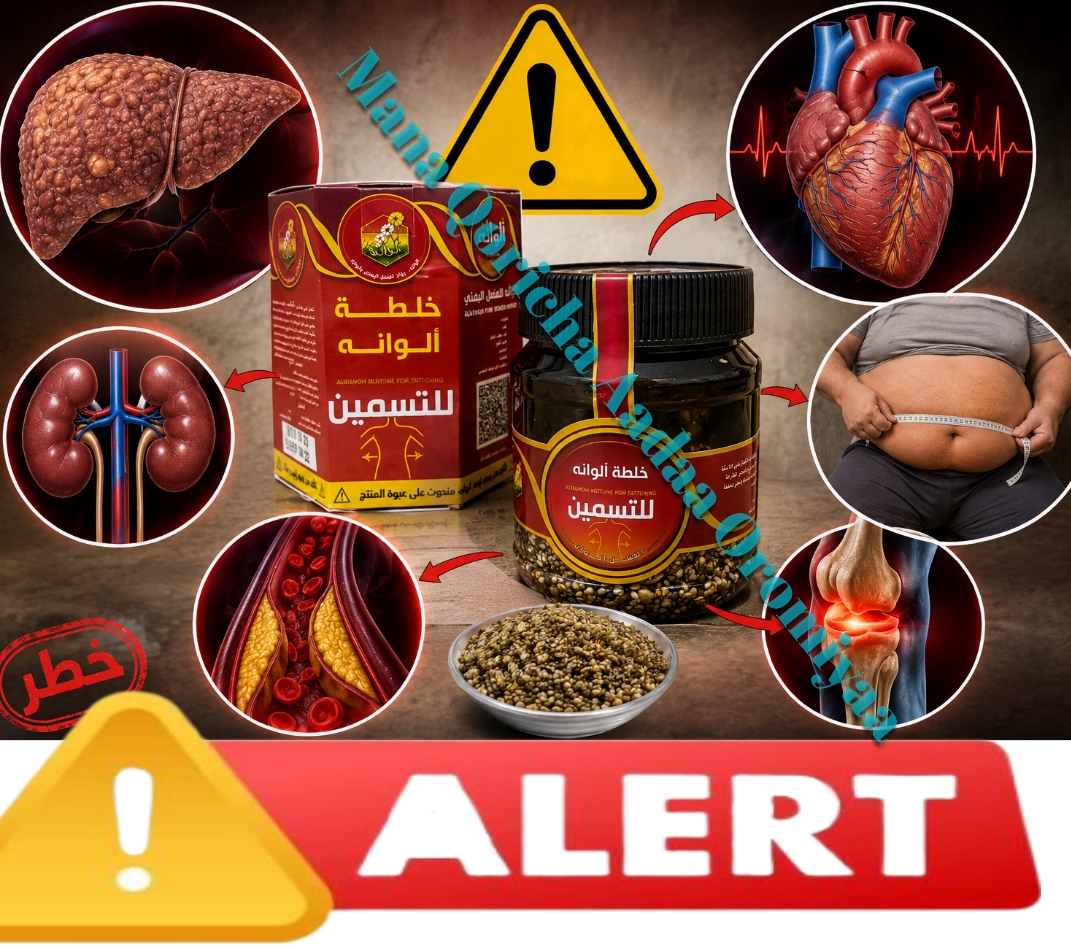
Products marketed as Yemeni honey, herbal fattening mixtures, appetite enhancers or “weight-gain honey” are widely promoted online. One product frequently discussed on social media is marketed under the name “Alwanoh Mixture for Fattening” and in Arabic as “خلطة ألوانه للتسمين.”
Such products are commonly presented as mixtures of honey, seeds, herbs, nuts, milk-derived ingredients or other traditional food components. Marketing often emphasizes rapid appetite stimulation and visible weight gain.
However, the critical medical question is not whether the product contains honey or herbs. The relevant questions are whether the product has undergone adequate quality control, whether all ingredients are truthfully declared, whether contaminating or undeclared pharmaceutical agents are present, whether the dose is standardized, whether there is toxicological evaluation, and whether safety has been established by an appropriate regulatory authority.
It is important to distinguish between evidence concerning a specific brand and evidence concerning the broader category of weight-gain mixtures. The studies discussed below investigated commercially available weight-gain products and honey/herbal mixtures in Yemen and Iraq. They demonstrate that this product category can contain undeclared pharmaceutical drugs. They do not, by themselves, prove that every individual brand contains those drugs unless that exact branded product has been independently tested.
What Did the Aden University Study Find?
A particularly important study was published in 2024 by researchers associated with the Faculty of Pharmacy in Aden, Yemen. The investigators analyzed five products marketed for weight gain in Aden, including a honey mixture, herbal preparations, capsules and tablets.
The researchers used ultraviolet spectroscopy and Fourier-transform infrared spectroscopy to screen for two pharmaceutical substances frequently associated with illicit adulteration of weight-gain products: cyproheptadine and dexamethasone.
The study identified undeclared cyproheptadine in some of the tested products, including a honey-based product, and dexamethasone in another tested product. The researchers concluded that weight-gain products marketed to consumers may contain undeclared pharmaceutical agents and called for stronger regulatory monitoring and routine quality-control testing.
This finding is important because the investigation was conducted inside Yemen itself, not merely in another country examining imported Yemeni products.
The study does not justify claiming that every Yemeni honey product contains dexamethasone or cyproheptadine. It does, however, provide direct evidence that products marketed for weight gain in the Yemeni market can contain undeclared pharmaceutical substances.
Evidence From Iraq Is Even More Concerning
A 2025 study published in the Journal of AOAC International investigated nine herbal supplements marketed as natural weight gainers in the Iraqi market.
Using high-performance liquid chromatography, the researchers found cyproheptadine in seven of the nine products, at concentrations ranging from approximately 2.65 to 8.6 mg per dosage unit. Dexamethasone was also detected in the analyzed test solutions at concentrations reported between approximately 6.2 and 18.75 mg per dosage unit.
The authors concluded that a substantial proportion of the tested “natural” weight-gain supplements contained undeclared pharmaceutical ingredients and emphasized the need for urgent regulatory control and regular quality testing.
These findings demonstrate a broader international problem: a preparation can be marketed as “herbal,” “traditional,” or “natural” while still containing pharmacologically active synthetic drugs that are not disclosed to the consumer.
Why Cyproheptadine Is Added to Weight-Gain Products
Cyproheptadine is a first-generation antihistamine with appetite-stimulating properties. Because it can increase appetite in some people, it may be deliberately added to weight-gain products to create an obvious and rapid effect.
However, if cyproheptadine is secretly added to a product, the consumer has no reliable information about the dose, frequency, drug interactions or contraindications.
The U.S. Food and Drug Administration notes that cyproheptadine can cause effects such as sedation and reduced mental alertness. In a 2026 safety action involving the weight-gain product Kian Pee Wan, FDA laboratory analysis confirmed the presence of undeclared cyproheptadine and dexamethasone.
The problem is therefore not that cyproheptadine has no legitimate medical use. The problem is uncontrolled exposure to an undeclared prescription drug in a product sold as a supplement or natural preparation.
Why Dexamethasone Can Produce Misleading “Weight Gain”
Dexamethasone is a potent corticosteroid used medically for specific inflammatory, immunological and other clinical conditions.
When taken without appropriate medical supervision, particularly at excessive doses or for prolonged periods, corticosteroids may cause hyperglycemia, immune suppression, muscle injury, psychiatric effects, adrenal suppression and other systemic complications. FDA also warns that prolonged exposure or abrupt discontinuation after sustained use can produce serious consequences.
Corticosteroids can also contribute to increased appetite, altered fat distribution and changes in body fluid balance.
This means that a consumer may look heavier or “fuller” after using a contaminated fattening preparation, while the visible change may not represent healthy muscle growth or nutritional restoration. It may reflect pharmacologically induced appetite increase, adipose redistribution, fluid-related changes or endocrine disturbance.
Such an effect should never be confused with healthy weight gain.
The United States FDA Has Confirmed the Same Pattern
The problem is not confined to Yemen or Iraq.
In March 2026, the U.S. Food and Drug Administration warned consumers not to purchase or use Kian Pee Wan, a product promoted as an appetite stimulant and weight-gain supplement.
FDA laboratory testing confirmed that the product contained dexamethasone and cyproheptadine that were not declared on the label. Later that month, all lots of the product were recalled in the United States. FDA stated that products containing these drugs could not lawfully be marketed as ordinary dietary supplements and that the product’s safety and effectiveness had not been established.
This case provides strong regulatory evidence that hidden pharmaceutical adulteration in products marketed for weight gain is a real and documented public-health problem.
What Has the Yemeni Drug Regulatory Authority Said?
The Supreme Board of Drugs and Medical Appliances (SBDMA) in Yemen issued Circular No. 118/11-1446 concerning unlicensed products.
The notice did not restrict its warning to one brand. It referred broadly to:
“جميع خلطات التسمين والتنحيف”
meaning all mixtures marketed for fattening and slimming, in different forms and under different names, when they are unlicensed.
The circular urged pharmacies, pharmaceutical businesses and consumers to avoid dealing with such unlicensed products and warned against their promotion and use.
This regulatory distinction is important. The evidence supports stating that the Yemeni authority warned against the broader category of unlicensed fattening and slimming mixtures. It should not automatically be interpreted as proof that a specific brand was individually laboratory-tested or formally banned unless a separate brand-specific regulatory notice exists.
Nevertheless, the warning is highly relevant because it demonstrates that Yemen’s own drug regulatory authority considers unlicensed fattening and slimming mixtures a public-health and regulatory concern.
Saudi Arabia Has Issued Similar Warnings
The Saudi Food and Drug Authority has also warned consumers about food and herbal mixtures promoted on social media with misleading health or nutritional claims, specifically including fattening and slimming mixtures.
The SFDA reported that some such products had been found to contain pharmaceutical substances that should only be used under medical prescription and urged consumers not to purchase unapproved products promoted through social-media accounts.
The SFDA has separately explained that herbal mixtures of unknown composition may be dangerous because of undeclared pharmaceutical drugs, toxic substances, microbial contamination, pesticide residues, heavy metals, improper storage and interactions with conventional medicines.
Therefore, advertising something as “herbal” does not remove the need for pharmaceutical-quality control, toxicological assessment and regulatory oversight.
“Natural” Does Not Mean Safe
One of the most dangerous misconceptions surrounding these products is the belief that honey, herbs or traditional ingredients automatically guarantee safety.
They do not. A genuinely natural product can still be unsafe because of excessive dosing, toxic plant constituents, contamination, microbial growth, pesticide residues, heavy metals, fungal toxins, interactions with medicines or inappropriate use in people with underlying disease.
A product can also be deliberately adulterated with a pharmaceutical agent to create a faster and more noticeable effect.
The rapid result then becomes part of the marketing strategy: the consumer sees appetite stimulation, increased body weight or visible swelling and concludes that the product is “powerful” or “effective,” while the apparent effectiveness may actually be the pharmacological effect of an undeclared drug.
The Health Consequences of Unhealthy Weight Gain
Even when a weight-gain product contains no hidden drug, deliberately creating excessive weight gain through very high caloric intake can still produce harmful metabolic consequences.
Excess adiposity is associated with insulin resistance, type 2 diabetes, hypertension, dyslipidemia, cardiovascular disease, fatty liver disease, sleep apnea, osteoarthritis and multiple cancers. WHO describes obesity as a major driver of noncommunicable disease and a chronic condition requiring comprehensive long-term management.
Obesity also increases mechanical stress on the knees, hips and spine, while visceral and ectopic fat accumulation can interfere with normal metabolic and organ function.
This is why “getting fat” should not be treated as a medical objective.
For an underweight patient, the proper goal is healthy nutritional recovery, not obesity.
Healthy Weight Gain Is Different From Fattening
There are situations in which medically supervised weight gain is appropriate.
A person with genuine underweight, malnutrition, chronic infection, gastrointestinal disease, malabsorption, hyperthyroidism, malignancy, eating disorders or another underlying condition may require assessment and structured nutritional treatment.
In those cases, management should begin with identifying the cause of low weight and assessing dietary intake, muscle mass, nutritional deficiencies and associated disease.
Healthy weight gain generally aims to increase body mass gradually through adequate protein, balanced carbohydrates, healthy fats, micronutrients and appropriate resistance exercise where clinically suitable.
The objective is to improve nutritional and functional status—not merely increase the number on a scale.
Imported Does Not Mean Approved
Consumers should also reject the belief that a product is safe simply because it comes from Yemen, Saudi Arabia, the Gulf states, Europe, America or another foreign country.
Country of origin is not a substitute for regulatory approval.
Before using any medicinal, herbal or dietary product, consumers should ask whether the exact product is registered with the relevant national regulator, whether its manufacturer is identifiable, whether its ingredients and doses are fully disclosed, whether independent laboratory testing exists, whether safety data are available, whether the batch is traceable, and whether regulatory warnings or recalls have been issued.
A product may be manufactured in one country while being unlicensed or discouraged by regulators in that same country.
Therefore, the correct question is not:
“Which country did this product come from?”
The correct questions are:
“Has this exact product been tested? Is it registered? What does the regulatory authority say? Are all ingredients disclosed? Is there credible scientific evidence for its safety?”
Conclusion
The available scientific and regulatory evidence provides substantial reason for caution regarding unlicensed herbal and honey-based products marketed for rapid appetite stimulation and weight gain.
Research from Aden, Yemen has demonstrated the presence of undeclared pharmaceutical substances in some products marketed for weight gain. Research from Iraq has independently found widespread cyproheptadine and dexamethasone adulteration among tested herbal weight-gain supplements. The U.S. FDA has recently confirmed the same two hidden drugs in another product promoted for appetite stimulation and weight gain.
Meanwhile, Yemen’s SBDMA has issued a regulatory warning covering unlicensed fattening and slimming mixtures, while the Saudi SFDA has warned consumers about fattening and slimming mixtures promoted online and has specifically noted that some may contain prescription pharmaceutical substances.
The evidence does not justify declaring every honey or herbal product dangerous, nor does it establish that every branded Yemeni weight-gain product contains hidden drugs. What it establishes is that this product category carries genuine, documented risks and that consumers should not assume safety based on the words “natural,” “herbal,” “honey,” or “imported.”
People should not spend money to purchase a future disease.
Anyone who is genuinely underweight should seek assessment of the cause and pursue medically and nutritionally appropriate weight restoration rather than using unregulated mixtures designed to produce rapid weight gain.
Scientific and Regulatory References
1. Badulla WFS, Bamahmood ES, Banafa SH. Spectroscopic Screening of Dexamethasone and Cyproheptadine Adulteration in Weight Gaining Products Marketed in Aden, Yemen. Addiction & Health. 2024;16(3):178–187. doi:10.34172/ahj.1549.
2. Ahmed AI, et al. Chromatographic Detection and Determination of Cyproheptadine and Dexamethasone as Adulterants in Weight Gain Supplements. Journal of AOAC International. 2025;108(5):753–759.
3. World Health Organization. Obesity and overweight. WHO Fact Sheet. Updated 2025.
4. World Health Organization. WHO issues global guideline on the use of GLP-1 medicines in treating obesity. 2025.
5. U.S. Food and Drug Administration. Kian Pee Wan may be harmful due to hidden drug ingredients. March 13, 2026.
6. U.S. Food and Drug Administration. Nationwide recall of Kian Pee Wan capsules due to undeclared dexamethasone and cyproheptadine. 2026.
7. Supreme Board of Drugs & Medical Appliances, Yemen. Circular No. 118/11-1446 concerning unlicensed fattening and slimming mixtures.
8. Saudi Food and Drug Authority. Warning regarding food and herbal mixtures carrying misleading health or nutritional claims, including fattening and slimming mixtures.
9. Saudi Food and Drug Authority. Eight reasons herbal mixtures may pose health risks.